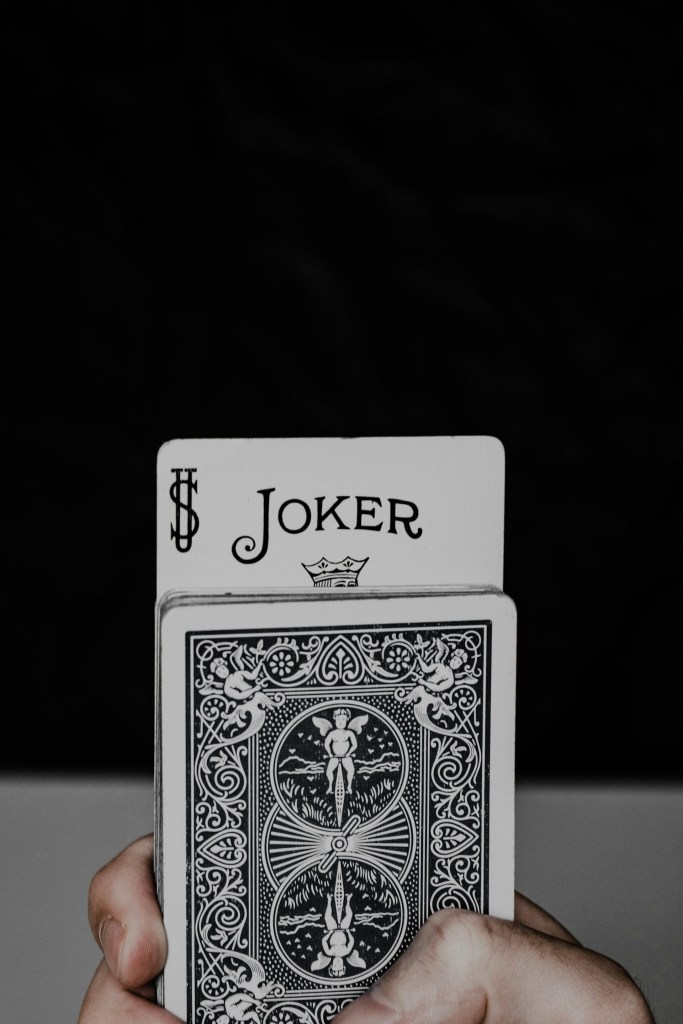
The Fool is an inspiration for creative living. As an archetype of aliveness, pleasure and play, Fools challenge ‘conventional’ thinking through provocation, humour and risk-taking. This gives the Fool freedom to explore new ideas, take calculated risks and try new things.
If life is a game, the Fool plays a different game.
Fools are adventurers. The Fool is that part of us that wants to live into a larger story of our lives. Like the Hero’s Journey, the Fool invites us to move beyond our comfortable places into the realms of the unknown or difficult places. In the difficult places, we face our fears, persons or insecurities before gaining the gold (in whatever form this takes). The journey starts with foolishness or naivety, but through reflecting on our experience, wisdom is gained while learning to enjoy the process.
Fools are truth tellers. In the Court of the King or Queen, the Fool was one of the few people who could be trusted to speak the truth. Like the little boy in `The Emperor’s New Clothes’, the Fool says `The Emperor has no clothes on.’ The Fool’s humour and insight is an important ‘reality check’ to the King or Queen’s temptation to believe their own stories.
The Fool helps us to take ourselves lightly. The fool’s ‘license to quip’ helps to raise awareness of our own foibles, faults and insecurities while making us laugh and celebrate the absurdities of life. Life is more fun and less complicated when we embrace our playfulness. Fool wisdom encourages self-acceptance while extending an invitation to move beyond and explore the unfamiliar or less know parts of ourselves.
The Fool represents the path to wisdom. To become wise, we must acknowledge our own ‘foolishness’. To use an old quote, ‘take the log out of your own eye, before trying to remove the speck from your brother’. The Fool’s self-understanding gives them powerful insight into other people.
Like small children, the Fool has a beginner’s mind. They thrive in the place of uncertainty and confusion in the move from not knowing to knowing and competence. The Fool is never too old to learn and grow.
The Fool can help us overcome our ingrained thoughts and behavioural patterns that prevent us from experiencing a ‘larger life’ outside of our comfort zones and well-travelled emotional landscapes.
Sometimes called ‘The Prince of the otherworld’, the Fool appears to live according to a different set of rules.
How can ‘The Prince of the otherworld’ help us to live in this one?
 Fool's Path to Adventure
Leave a comment